You just got a letter, or maybe a lawsuit. Now one question keeps you up at night: how much is this going to cost me?
So you search for ADA lawsuit settlement amounts. Most of what you find online gives you a vague range, no proof, and no word about the other bills.
Here’s the honest answer. Nobody publishes the real average, because settlements are private. But we know a lot about what goes into the bill, and that part matters more.
I check 25 to 30 local business websites every month for a Los Angeles agency, and owners ask me about cost more than anything else. So I read the laws, the lawsuit reports and the news.
Below, I’ll show you what’s solid and what’s only a guess.
Here’s what you’ll get in this guide:
- The short answer on ADA lawsuit settlement amounts
- The five costs most articles online forget
- Why California cases can cost more
- A fix first or settle first comparison
- Five steps to lower your risk before a letter arrives
Ready?
Let’s start with the short answer.
Not legal advice. NexoBee builds and fixes websites. We are not a law firm. This guide explains costs in general and can’t tell you what your own case will cost. Please talk to an ADA lawyer about your own letter or lawsuit.
The short answer: what do ADA lawsuit settlement amounts look like?
Nobody knows the true average for ADA lawsuit settlement amounts. Settlements are private deals, and no court or government office counts them.
Here’s what people do report. Writers who follow these cases often describe the range as four to five figures (that’s anywhere from about $1,000 to $99,999). A Georgia TV investigation said settlements can reach the tens of thousands of dollars per business. Neither report shows court records, so treat both as rough.
You may also see $5,000 to $20,000 online. The author of that article says the number comes from talking with clients and defense lawyers, not from data.
Why does this matter?
A guess starts to look like a fact when ten sites copy it. I’d rather show you what we can prove.
Pro Tip: ADA lawsuit settlement amounts show only one part of the bill. Ask your lawyer about all five costs in the next section, not just the payment to the other side.
What do you actually pay in an ADA website case?
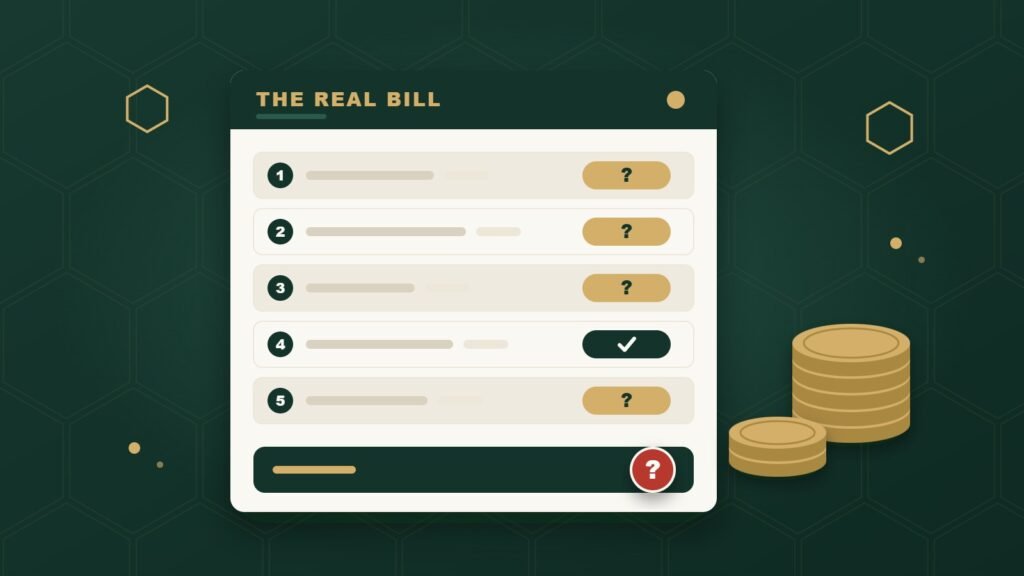
Think of the bill as five parts. Most articles on ADA lawsuit settlement amounts only show you one.
| Cost | Who gets the money | Can you know the number? |
|---|---|---|
| 1. The settlement payment | The person who sued, and often their lawyers | No. Settlements are private. |
| 2. The other side’s lawyer fees | The plaintiff’s lawyers (the lawyers for the person suing) | Not up front. Federal law lets a winning plaintiff ask the court for these fees, and they’re often folded into the settlement. |
| 3. Your own lawyer | Your law firm | Ask for an estimate in writing. Lawyers bill by the hour. |
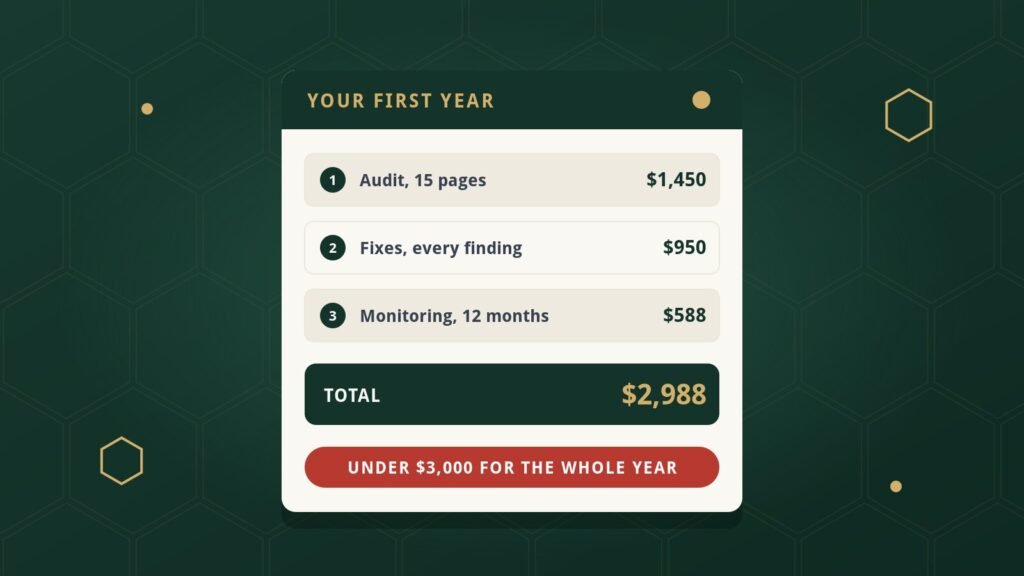
| 4. Fixing your website | Your web team or an accessibility company | Yes. You can get a quote today. |
| 5. Extra promises in the deal | No one, but it takes time and work | Settlements can add a fix deadline and a re check. |
Look at that last column. The first three costs stay a mystery until a lawyer gets involved. The fourth is the only one you can price today.
In the public lawsuit I read, the person asked for three things: a court order to fix the site, at least $4,000 for each violation under California law, and his lawyer’s fees. The filing gave no total. I break that filing down in our 7 day guide to the ADA demand letter. (The $4,000 is a floor, which means the lowest amount a court can award for each violation, not the most.)
Why can California push ADA lawsuit settlement amounts up?
California has its own law, the Unruh Civil Rights Act (a state law that bans discrimination by businesses). Under Civil Code 52(a), a person can ask for actual damages (money for real harm), up to three times that amount, and at least $4,000 for each offense. The court can also add lawyer fees.
The federal law works differently. Under Title III of the ADA (the part about businesses open to the public), a private person can ask a court to order a fix and to award lawyer fees. They can’t ask for money as damages.
The $4,000 floor is why California cases can add up fast. A site with many problems can mean many offenses. How the count works depends on the case, so ask a lawyer how it applies to you.
There’s one big limit. In 2022, a California appeals court ruled in Martinez v. Cot’n Wash that a website needs a link to a physical place to be covered by the Unruh Act. So online only stores may face less risk under this law. If you have a shop, a restaurant or an office, don’t count on that limit.
California filings also fell in 2025, according to UsableNet, while New York and Florida stayed busy. In federal court alone, Seyfarth Shaw counted 1,021 website cases in New York and 961 in Florida.
Federal court or state court: what changes?
UsableNet counted more than 5,000 digital accessibility lawsuits in 2025. Of those, 3,195 were in federal court and 1,919 were in state courts in New York and California.
- Federal court: A person can ask for a court order to fix the site and for lawyer fees.
- State court: State laws can add money on top. California’s Unruh Act is the best known. A Florida law firm also says the Florida Civil Rights Act allows damages for disability discrimination.
Where a case lands depends mostly on where the person lives, where you do business, and what their lawyer chooses. You don’t get a vote. That choice can shape your ADA lawsuit settlement amounts.
Pro Tip: Fixing early can help, but it isn’t a sure shield. In a 2001 case called Buckhannon, the US Supreme Court said a plaintiff must win a court judgment or a court approved deal to get lawyer fees. A change you make on your own isn’t enough. Some federal courts have also thrown out cases after the barriers were fixed. Ask your lawyer before you count on it.
The hidden cost: what happens if you get sued again?
In 2025, 1,427 of the federal website cases targeted companies that had been sued before. That’s 45% of all federal cases, says UsableNet.
In plain words, nearly half of the federal cases hit a business that already had a claim. A settlement closes one case. It doesn’t make your website accessible, and it doesn’t stop the next person from filing.
My read, and not hard data: a quick fix on only the pages named in one letter leaves the rest of the site open. The report doesn’t say why repeat cases happen.
Local businesses are in the mix too. UsableNet said restaurants and food service made up about 21% of cases in 2025.
Fix first or settle first? A side by side example
Here’s a made up example, so you won’t see dollar amounts. A local restaurant gets a letter. The menu is a PDF a screen reader (software that reads a page out loud) can’t read. The order buttons have no labels. The photos have no alt text (a short note that describes a picture).
| Path | What you pay | What you keep | Main risk |
|---|---|---|---|
| Settle only | The settlement and both sets of lawyer fees | A closed case | The same problems stay on the site, so someone else can sue. |
| Fix first | An audit, the fixes and your own lawyer | A working site and a record of the work | The sender may still ask for fees. Ask your lawyer. |
| Fix and settle | All of the above | A closed case and a fixed site | The biggest bill now. A smaller chance of a repeat, but no promise. |
In most cases the site gets fixed in the end. Unlike ADA lawsuit settlement amounts, it’s the one cost on the list that also helps your customers.
How can you lower your risk before a letter arrives?
You can’t stop every claim. You can make your site a much harder target, and you can show you acted in good faith. Lowering risk costs less than guessing at ADA lawsuit settlement amounts later. Start here:
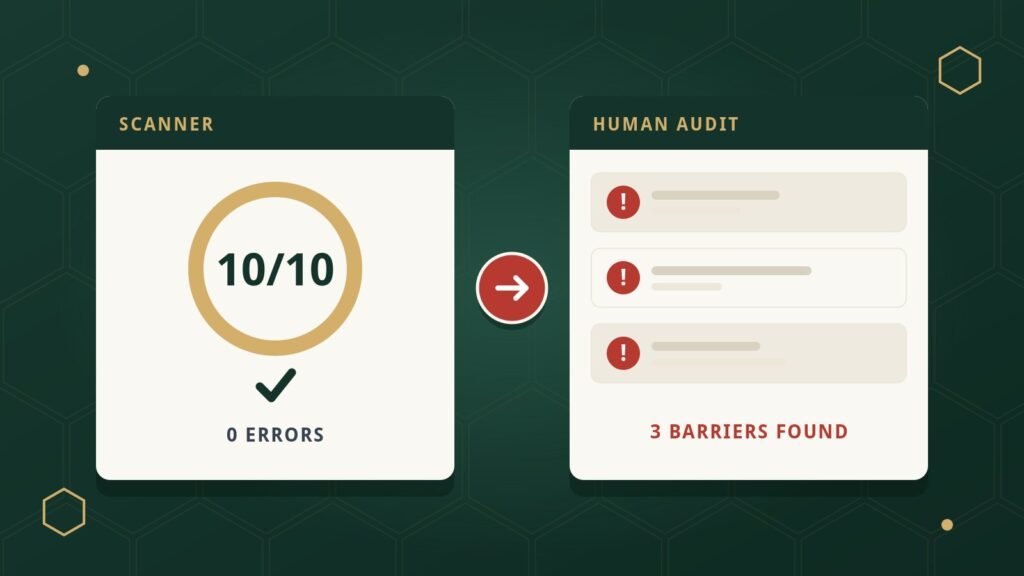
- Get an accessibility audit. Test against WCAG 2.2 AA (the web rules most audits use, explained in our ADA vs WCAG guide). Use a keyboard and a screen reader, not only an automatic scanner.
- Fix what blocks customers first. Forms, booking, ordering and menus come before small design issues.
- Check your third party tools. Booking and chat apps sit on your pages, so your customers meet their problems on your site.
- Don’t rely on an overlay alone. An overlay is a button that adds a menu on top of your site without changing your code. In April 2025 the FTC finalized an order against one overlay vendor over what it claimed its tool could do.
- Add an accessibility statement and a way to report problems. Then book a re check and keep monitoring.
Want to know where your site stands before ADA lawsuit settlement amounts become your problem? NexoBee runs accessibility audits and code fixes for small business owners. Contact us now and tell us about your site.
Frequently asked questions
How much is the average ADA website settlement?
Nobody knows for sure, because ADA lawsuit settlement amounts are private and no court or agency publishes an average. Writers who follow these cases often say four to five figures, and a Georgia TV investigation said settlements can reach the tens of thousands of dollars per business. Treat both as rough, and ask your lawyer about your own case.
Does business insurance cover ADA website lawsuits?
Often not, so check your policy now. In 2020, the insurance broker AmWINS said standard general liability policies do not cover website access claims. Some employment practices policies may pay defense costs, but they usually do not pay to fix the site. Policies differ, so ask your agent in writing.
Can I settle without fixing my website?
Usually not. Federal law lets a person ask a court to order a fix, and settlements often include fix terms, like a deadline. Even if yours does not, a settlement will not stop someone else from suing over the same problems. Ask your lawyer what your deal needs.
Why do many ADA website cases settle instead of going to trial?
A trial is slow and costly, and a winning plaintiff can ask the court to make you pay their lawyer fees too. So many owners settle, even when they think the claim is weak. One TV investigation reported that most of the money goes to the lawyers, and that New York plaintiffs it spoke to were paid about $500 per settlement. Talk to your lawyer before you decide.
Sources: UsableNet, 2025 year end digital accessibility lawsuit report. UsableNet, ADA web lawsuit trends for 2026. Seyfarth Shaw, federal website filings in 2025. California Civil Code 52. Mintz, Martinez v. Cot’n Wash. Buckhannon v. West Virginia, 532 U.S. 598. Leech Tishman, remediation and mootness. Darrow Everett, Florida ADA litigation. AmWINS, insurance and ADA websites. Channel 2 Action News (WSB TV). EqualWeb. Accessible.org. FTC, final order against accessiBe. Complaint details come from a public San Francisco Superior Court filing dated February 13, 2025. Settlement figures are reported ranges, not court data. Last checked October 3, 2026.